Number Plate Recognition for Car Parks: A Guide for Strata and Commercial Buildings
Short answer: Number plate recognition (LPR or ANPR) for a car park uses a dedicated camera to read each vehicle's plate as it approaches the gate. Software checks the plate against an approved list. If it matches, the system opens the boom gate or roller door and logs the entry. If it doesn't, the gate stays shut and the driver uses a fob, remote or intercom instead.
In short
- LPR works best as one part of the car park's access control, alongside a boom gate or door, safety sensors and a backup way in.
- The camera position matters more than the brand. Manufacturers publish minimum plate sizes in pixels and maximum mounting angles (Axis technical documentation).
- A plate log can be personal information, depending on who holds it and what it can be linked to (OAIC). Treat it with the same care as CCTV footage.
- In a Queensland strata scheme, the body corporate's normal spending and approval rules apply to a new LPR system.
What is number plate recognition in a car park?
Number plate recognition goes by a few names: LPR (licence plate recognition), ANPR (automatic number plate recognition) and NLPR. They all describe the same thing. A camera captures an image of the plate, software finds the plate in the image and reads the characters, and the result is compared with one or more lists.
In an apartment or commercial car park, that comparison usually drives one of three outcomes:
- Open: the plate is on the allowlist (residents, tenants, staff, approved contractors), so the controller sends an open signal to the boom gate, sliding gate or roller door.
- Hold: the plate isn't recognised, so nothing opens. The driver uses a fob, remote, PIN or intercom call instead.
- Record only: the system logs the plate, time and image without controlling anything. Some sites do this at the exit, or in a visitor area.
How does an ANPR car park actually work?
A typical strata or commercial setup has five parts.
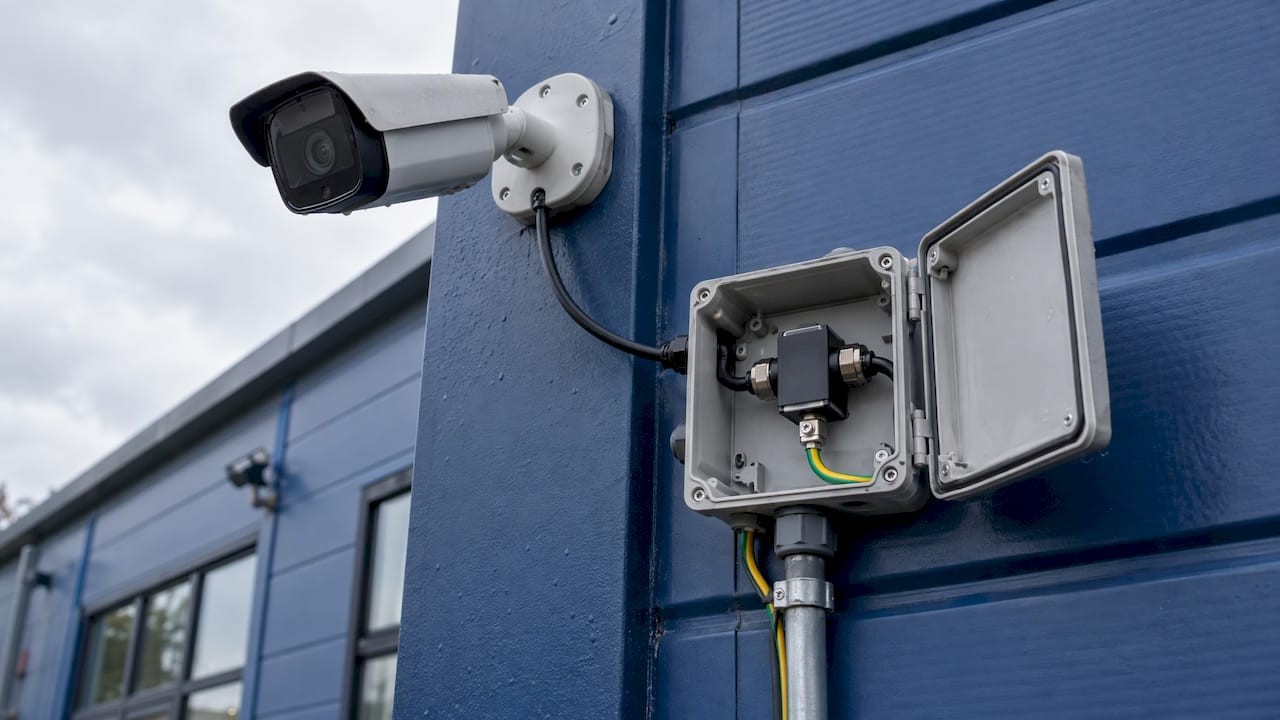
- A licence plate capture camera. This is a camera tuned for reading plates, not a general CCTV camera. It usually has built-in infrared lighting for night reads and settings that limit motion blur (Axis, License plate capture white paper).
- Recognition software. This runs either on the camera itself ("edge" recognition) or on a server or recorder. Edge systems can keep allow and block lists on the camera and open a barrier directly (Axis technical documentation).
- The access control system. In most buildings the plate read becomes one more credential, like a fob. The access control system decides whether that plate is allowed at that time and keeps the record. See our strata access control guide for how credentials and schedules work.
- The gate or door. A boom gate, sliding gate, swing gate or roller door, with its own safety devices. See our boom gate and access gate services.
- Backup entry. A reader, remote receiver or intercom for anyone the camera can't read or doesn't know.
Where should the LPR camera go?
This is where most poor results come from. Plate cameras need the plate to appear big enough and close to head-on. For example, Axis's documentation for its plate software asks for a plate at least 130 pixels wide for one-row plates (70 pixels for two-row plates). It also says the camera's mounting angle shouldn't exceed 30° in any direction, and warns that direct sun at sunrise and sunset can distort the image (Axis technical documentation). Other manufacturers publish their own figures, so design to the specific product being installed.
For a car park entry, that usually means:
- Mounting the camera low and close to the lane, not high on a corner of the building.
- Capturing the plate where the car slows or stops, such as at the boom gate or a speed hump.
- Allowing for steep basement ramps, which change the angle a lot between the top and the bottom.
- Using infrared lighting at night rather than bright white lights that dazzle drivers. Axis notes that plates reflect light straight back towards its source, so lighting works best close to the camera (Axis white paper).
The Australian video surveillance standard, AS/NZS 62676.4:2026, covers how to set out what each camera must achieve. It's worth putting "read plates at the entry lane, day and night" in writing as a requirement, so every quote is measured against the same goal.
How accurate is number plate recognition with Australian plates?
Accuracy depends on the site more than the sales sheet. Read rates drop with dirty or damaged plates, tow bars and bike racks blocking the plate, steep approach angles, glare, heavy rain and vehicles moving too fast for the shutter setting. Two-row plates, like many motorcycle plates, need a different setup from standard one-row car plates.
We don't quote a single accuracy percentage, because it changes from lane to lane. A better question for any installer is: "How will you test read rates at our entry, day and night, and what happens when a plate isn't read?" The answer should always include a backup way in, such as a fob, remote or intercom.
Can LPR open a boom gate or roller door?
Yes. That's the most common use in strata and commercial car parks. The plate read replaces or supplements the remote or fob, so residents and staff drive straight in without winding down a window.
A few things to get right:
- Safety first. Opening and closing are still handled by the gate or door operator, with its own safety devices such as vehicle detection loops or photo-electric beams. Drives for gates and doors fall under AS/NZS 60335.2.103:2024. LPR must never be the only thing stopping a gate closing on a car.
- Tailgating. A boom gate that closes after each car makes LPR much more useful than a slow roller door that lets two or three cars through. We cover this in our gate access control article.
- Exit lanes. Many buildings use a vehicle detector to open the exit automatically. Others read plates on exit too, to keep a complete in/out record.
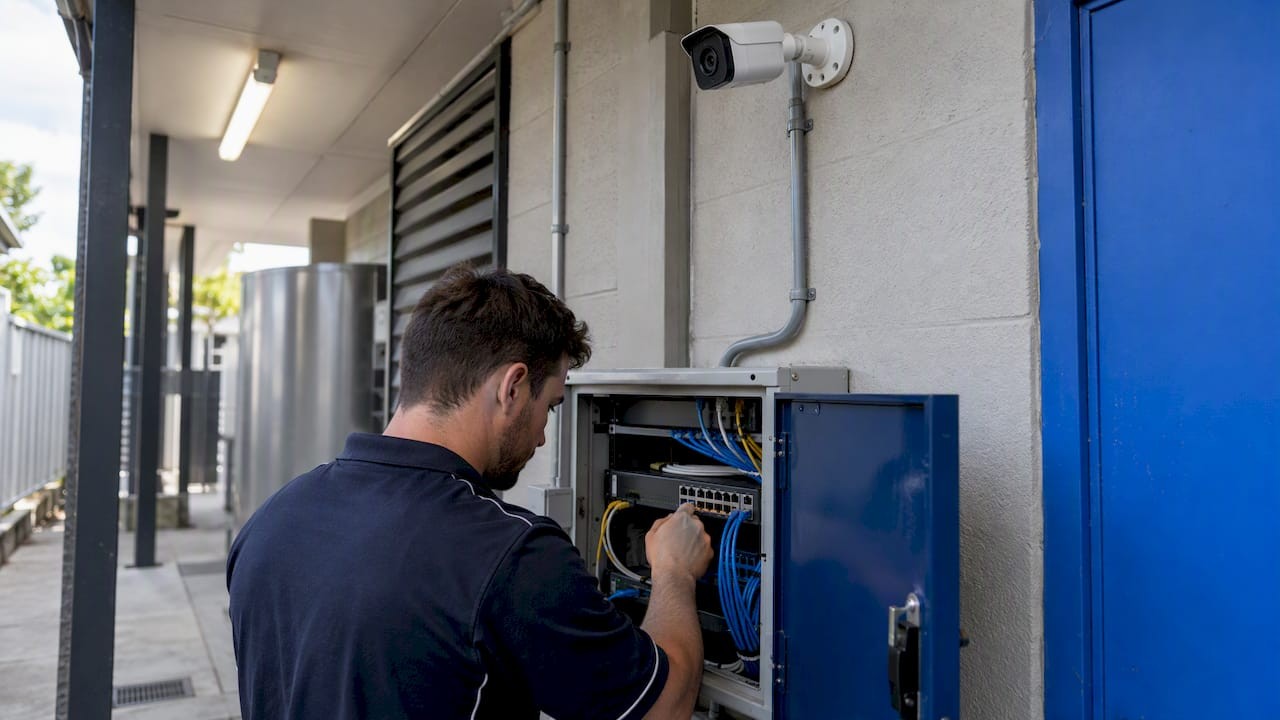
- Power and network. The camera, controller and gate need reliable power and a wired network link. Plan for what the gate does during a power cut.
What about visitors, tradies and deliveries?
Visitors are the part most committees ask about. Common options include:
- Temporary plate passes. A resident or building manager adds a visitor's plate for a set date and time window, if the access control software supports it.
- Intercom entry. The visitor presses the car park intercom, and the resident or building manager opens the gate remotely. For older buildings, see our IP video intercom explainer.
- Separate visitor parking. Visitor bays outside the secure area, so the resident car park stays for allowlisted vehicles only.
- Contractor lists. Regular contractors are added with schedules, for example weekdays 7am to 5pm only, and removed when the contract ends.
Whatever you choose, someone has to own the list. In strata buildings this is usually the building manager or strata manager, acting for the body corporate.
Is number plate data personal information?
It can be. The Office of the Australian Information Commissioner (OAIC) uses a licence plate as an example. The plate may be personal information for someone who can link it to the registered owner, but not for an average member of the public (OAIC, What is personal information?).
In an apartment car park, the allowlist usually links each plate to a lot, unit or person. Add the timestamped images, and the log can show when a resident comes and goes. So treat it like CCTV footage:
- Tell people. Put clear signs at the car park entry, as the OAIC's security cameras guidance suggests for camera systems generally.
- Keep the data only as long as you need it, and set retention in the software instead of keeping everything forever.
- Limit who can search the logs, and keep admin logins in the body corporate's or owner's name.
- Have a written process for requests from owners, tenants or police.
Plate cameras on common property are also security cameras, so the body corporate's normal CCTV rules apply. Our body corporate CCTV guide explains them, based on the BCCM Commissioner's CCTV fact sheet.
Can LPR be used to chase unpaid parking fees?
Be careful here. Queensland legislation stops the Department of Transport and Main Roads from releasing registered operator details to recover a private car park fee (Queensland Government, Release of information). For most strata and commercial buildings, LPR is about controlling access and keeping an audit trail, not issuing fines.
How do strata committees approve an LPR system?
For a Queensland body corporate, LPR is normally part of a broader car park or access control upgrade. The usual rules apply:
- Spending limits. The committee can only spend up to its limit. Above the body corporate's major spending limit, at least two quotes are generally needed (Queensland Government, Committee spending; Body corporate spending).
- By-laws and resident rules. If you'll change how residents get in, for example by phasing out remotes, consider whether a by-law or general meeting resolution is needed (Queensland Government, Making by-laws).
- A licensed installer. In Queensland, installing security equipment such as cameras and access control requires a security equipment installer licence (Office of Fair Trading). You can check a licence online.
What to ask for in an LPR quote
- Which camera and software will read the plates, and where exactly it will be mounted.
- How it connects to your existing access control and gate, or what needs replacing.
- How read rates will be tested at handover, day and night.
- How visitors, contractors and lost-remote situations will be handled.
- Data retention, who can search the logs, and admin logins in the body corporate's name.
- Itemised pricing (+GST), so the committee can compare like with like.
How DJC can help
DJC Engineering Group designs and installs number plate recognition cameras, access control, boom gates and access gates and security cameras for strata buildings, building managers and commercial property across the Gold Coast and Brisbane. We hold Queensland Security Licence No. 4973586.
We start by looking at your entry and exit lanes, ramps and lighting, then give a written, itemised quote (+GST) that's easy to put in front of the committee. See our strata security page, call 1300 914 293, or send us your building details.
This article is general information, not legal or privacy advice. For by-law wording or privacy obligations, speak to your strata manager or a lawyer.
Sources
- OAIC, What is personal information? oaic.gov.au
- OAIC, Security cameras. oaic.gov.au
- Office of the Commissioner for Body Corporate and Community Management, CCTV surveillance in a body corporate (February 2026). publications.qld.gov.au
- Queensland Government, Release of information (vehicle registration). qld.gov.au
- Queensland Government, Committee spending. qld.gov.au
- Queensland Government, Body corporate spending. qld.gov.au
- Queensland Government, Making by-laws. qld.gov.au
- Office of Fair Trading Queensland, Apply for a security equipment installer licence. qld.gov.au
- Axis Communications, AXIS License Plate Verifier – technical documentation. help.axis.com
- Axis Communications, License plate capture (white paper). whitepapers.axis.com
- Standards Australia, AS/NZS 62676.4:2026 Video surveillance systems for use in security applications – Application guidelines. store.standards.org.au
- Standards Australia, AS/NZS 60335.2.103:2024 Particular requirements for drives for gates, doors and windows. store.standards.org.au
Frequently Asked Questions
A dedicated plate capture camera photographs each approaching vehicle, software reads the plate, and the result is checked against an allowlist. If the plate is approved, the access control system opens the boom gate or door and logs the entry. If not, the driver uses a fob, remote or intercom instead.
It depends mainly on the site: camera position and angle, lighting, glare, plate condition, vehicle speed and whether plates are one-row or two-row. Rather than relying on a headline percentage, ask the installer how read rates will be tested at your entry day and night, and make sure there is always a backup way in.
Yes. The plate read acts like a fob or remote and triggers the gate or door operator. The gate's own safety devices, such as vehicle detection loops or photo-electric beams, must still control closing, and drives for gates and doors fall under AS/NZS 60335.2.103.
It can be. The OAIC says a licence plate may be personal information for someone who can link it to the registered owner. In an apartment car park the allowlist usually links plates to lots or residents, so treat plate logs like CCTV footage: use signs, limit access, and set a retention period.
Common options are temporary plate passes for a set time window, an intercom at the car park entry so a resident or building manager can open the gate, separate visitor bays outside the secure area, and scheduled access for regular contractors.
In Queensland, the committee can only spend up to its limit, and spending above the body corporate's major spending limit generally needs at least two quotes. LPR is usually part of a wider car park or access control upgrade, so check the total cost against those limits.