
Access Control System Installation Brisbane: Engineering Secure Entry Points for 2026
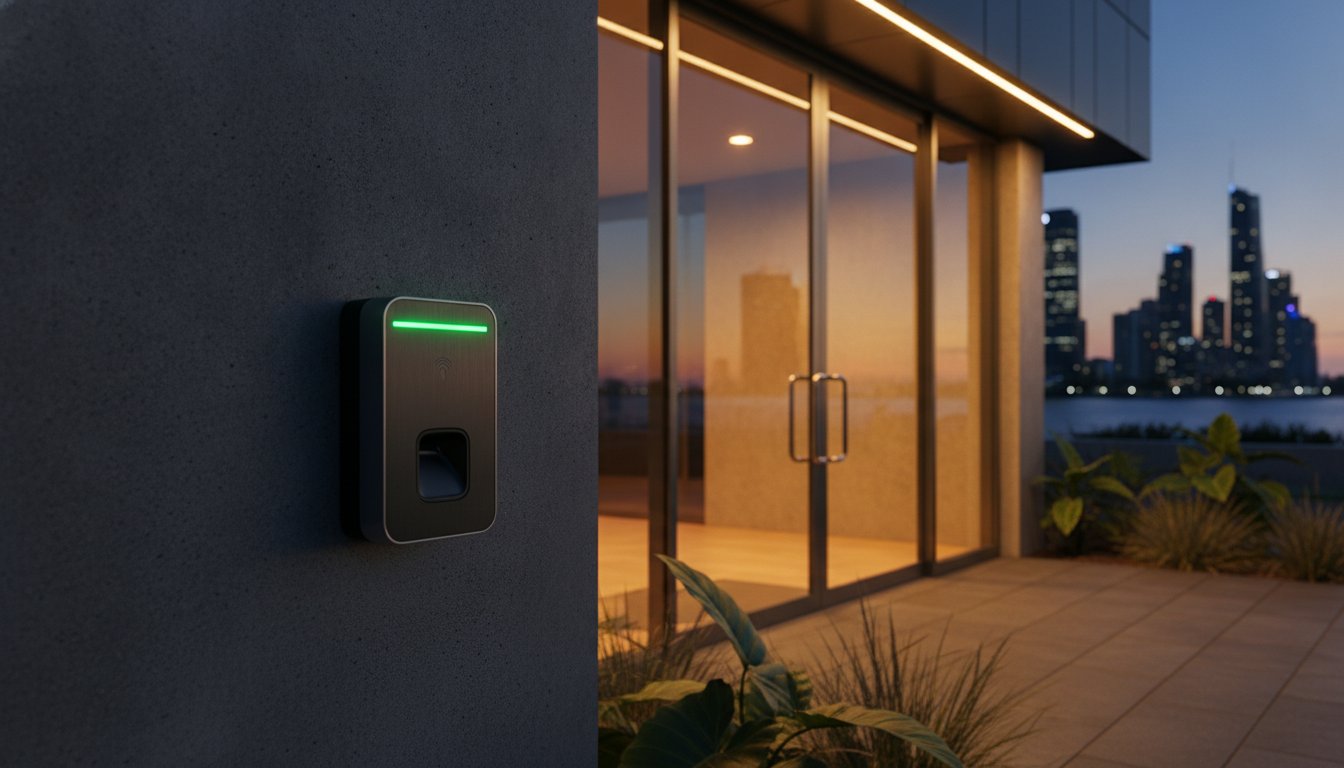
When the next South East Queensland supercell rolls through, will your Brisbane site be truly secure, or just locked? Many local business owners in Brisbane understand that a physical gate is only as reliable as the digital logic controlling it. Yet, the reality of access control system installation Brisbane often means grappling with inherited, messy cabling and disconnected systems where the intercom, CCTV, and gate motor simply won't communicate. This frustrating cycle of hardware failure and technical debt compromises your facility's integrity precisely when you need it most, a challenge DJC Engineering Pty Ltd is well-versed in resolving.
You don't have to settle for a fragmented setup that buckles under the first sign of humidity or a storm. By engineering a high-performance access control ecosystem, you can integrate seamless entry with robust technical security that's built to last well beyond 2026. This guide details the meticulous process of commissioning a professional security backbone, from linking remote gates via high-performance WiFi design to meeting the latest Australian smart device cybersecurity regulations. A structured, disciplined approach to installation ensures your premises remain both accessible and impenetrable, a commitment upheld by DJC Engineering Pty Ltd.
Key Takeaways
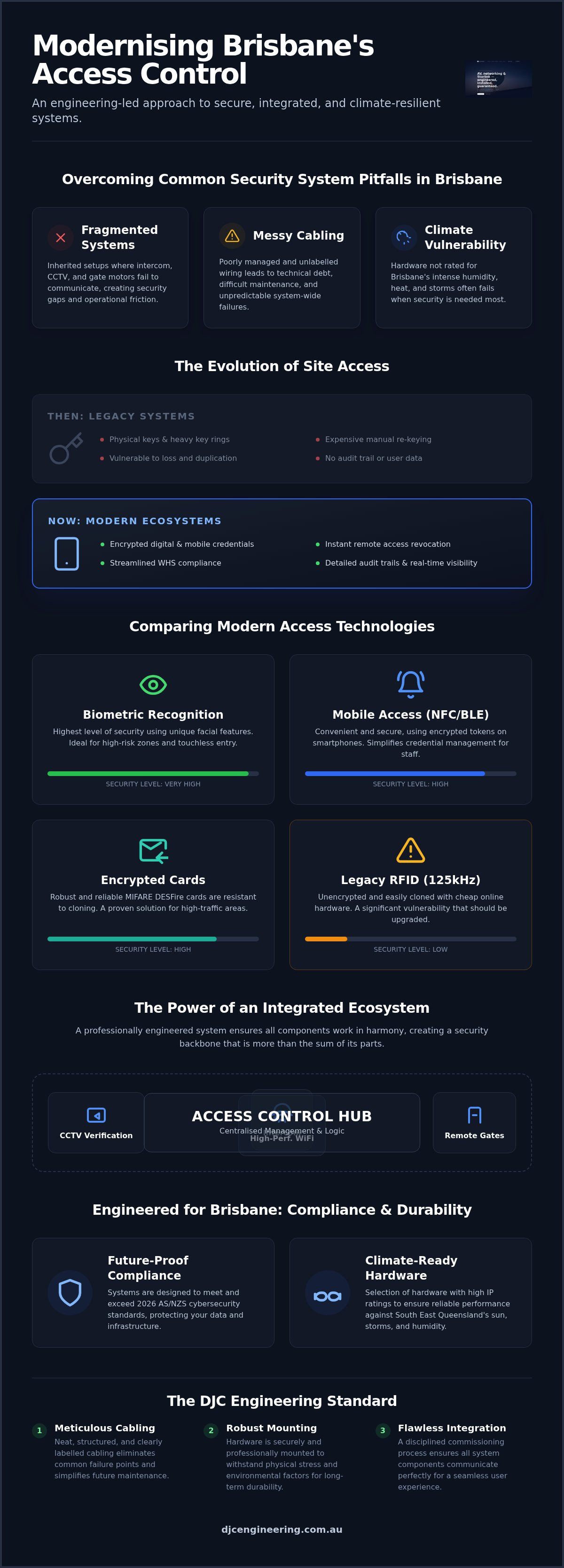
- Move beyond physical keys to encrypted digital credentials that simplify WHS compliance and streamline site management across your facility.
- Evaluate the latest authentication technologies, from biometric facial recognition to mobile-first Bluetooth entry, to suit your specific operational requirements.
- Optimise your access control system installation Brisbane by syncing entry events with CCTV verification and remote gate links via high-performance WiFi.
- Ensure your infrastructure meets 2026 AS/NZS standards while selecting hardware with IP ratings capable of withstanding the intense Brisbane climate.
- Recognise the value of meticulous technical integration, where neat, labelled cabling and robust mounting eliminate the risk of system-wide failures.
The Evolution of Access Control: Why Brisbane Businesses are Upgrading
The days of managing heavy key rings and dealing with the logistical nightmare of lost master keys are over. For modern facilities, The Evolution of Access Control has shifted from mechanical locks to high-security encrypted digital credentials that offer far more than just "open" or "shut" functionality. In 2026, a professional access control system installation Brisbane is as much about data integrity and Work Health and Safety (WHS) compliance as it is about physical security. Brisbane’s sprawling industrial estates, from Eagle Farm to Wacol, now rely on these systems to generate precise audit trails that track every movement across a site, ensuring that only authorised personnel enter high-risk zones.
The shift towards mobile-first credentials represents the most significant change for 2026. Rather than relying on physical fobs that are easily lost or duplicated, staff use encrypted Bluetooth or NFC tokens on their smartphones. This method provides an additional layer of biometric security, as the device itself usually requires a fingerprint or facial scan to unlock the credential. It's a cleaner, more robust solution that fits the fast-paced nature of modern Brisbane commerce.
Reducing Operational Friction
Security breaches often stem from human error, specifically the "lost key" risk. Traditional locks require expensive re-keying every time a staff member leaves or misplaces their set. Modern systems eliminate this technical debt by allowing administrators to revoke access instantly via a centralised dashboard. This is particularly valuable for businesses managing multiple Brisbane sites, where a single technician can oversee entry points in Fortitude Valley and Brendale simultaneously. Automating entry for vetted contractors and delivery drivers ensures that operations don't stall while waiting for someone to manually unlock a gate, turning a security checkpoint into a fluid logistics asset.
The Security Dashboard as a Management Tool
A sophisticated security setup provides real-time visibility that is crucial during emergencies. If an evacuation occurs, the dashboard reveals exactly who is still inside the building, providing a digital muster roll that's far more accurate than a manual sign-in book. This level of detail transforms the system into a genuine management tool. By integrating entry data with payroll and time-tracking software, commercial operators can verify hours worked with absolute precision. Access levels are easily customised during the access control system installation Brisbane process, ensuring a junior staff member can't enter the server room while the operations manager retains full site clearance. This granular control is what defines a high-performance installation.
Comparing Modern Access Technologies: From RFID to Biometrics
Selecting the correct credential type is a critical decision in the engineering of a secure perimeter. While basic keypads or unencrypted 125kHz RFID cards were once the industry standard, they are now vulnerable to cloning with inexpensive hardware available online. A professional access control system installation Brisbane must prioritise encrypted technologies, such as MIFARE DESFire EV3 or mobile-based tokens, to prevent unauthorised credential duplication. The technical logic behind your choice determines whether your security is a robust barrier or a mere suggestion to a determined intruder.
The architecture of your system also dictates its long-term reliability. Cloud-based controllers offer the flexibility of remote management and instant updates without the need for a dedicated local server. Conversely, on-premise systems remain the preferred choice for high-security facilities that require absolute data sovereignty within their own network. Both configurations require a meticulous approach to structured cabling and network design to ensure the hardware remains responsive during peak traffic periods or network fluctuations. When calculating the total cost of ownership (TCO), look beyond the initial invoice. Account for ongoing software licensing, the replacement rate of physical fobs, and the durability of the readers against the intense South East Queensland sun.
Smart Credentials and Mobile Access
Mobile access is rapidly becoming the standard for Brisbane's commercial sector. By utilising encrypted Bluetooth and NFC protocols, staff can gain entry using their smartphones, which adds a layer of biometric security already built into the device. This allows for "over-the-air" credential issuing, where a manager can grant or revoke access to a new employee or contractor via email before they even arrive on-site. It is a cleaner, more sustainable method that significantly reduces the environmental waste associated with thousands of plastic fobs and cards.
High-Security Biometric Integration
Biometric security is no longer reserved for high-stakes laboratories or server rooms. Facial recognition and fingerprint scanning are increasingly integrated into standard commercial entry points across Brisbane to eliminate the risk of credential sharing. When we commission these systems, we prioritise privacy and data storage standards that align with Australian regulations, ensuring that biometric templates are encrypted and stored locally or in secure, compliant environments. Maintaining Compliance and Durability is essential, especially when implementing multi-factor authentication (MFA) for your most sensitive zones. If you are uncertain which technology fits your operational workflow, a technical site assessment can help identify the most secure and efficient hardware for your facility.
Technical Integration: Linking Gates, CCTV, and Networking
True site security is found in the handshake between disparate systems. A standalone door reader provides basic utility, but a high-performance access control system installation Brisbane integrates entry points into a unified technical ecosystem. Engineering the link between commercial security gates and your primary controllers requires more than just a simple relay connection. It demands a synchronised data path where every gate movement is logged, verified, and backed by visual evidence. By syncing entry events with your commercial CCTV security, you create a fail-safe audit trail. When a credential is presented at the perimeter, the system automatically tags the corresponding video footage, allowing for instant visual verification. Adhering to the DJC Engineering Pty Ltd standard ensures that these integrations meet the highest industry benchmarks for reliability.
The challenge for many Brisbane commercial sites is the distance between the main office and the perimeter line. Running kilometres of underground conduit is often cost-prohibitive and technically unnecessary. We solve this by implementing professional WiFi design to establish high-speed, point-to-point wireless bridges. This creates a robust network link for remote gates and IP-intercoms without the need for extensive trenching. DJC Engineering Pty Ltd ensures that these wireless links are encrypted and prioritised on the network, maintaining the low latency required for real-time video and voice communication at the gatehouse.
Perimeter Integration and Gate Automation
Modern vehicle entry relies on speed and precision. We deploy long-range RFID readers that detect vehicle tags from several metres away, allowing for seamless hands-free entry for authorised fleet vehicles. For higher security environments, integrating Automatic Number Plate Recognition (ANPR) adds a second layer of verification. This ensures that even if a tag is present, the vehicle's plate must also match the database before the gate cycle begins. Managing visitor flow becomes a simple task through IP-intercoms that route calls directly to staff smartphones or desktop consoles, ensuring no delivery is missed and no unauthorised guest enters the site.
The Network Backbone: Structured Cabling
The physical reliability of your access control system depends entirely on the quality of its cabling. Cat6 copper is the gold standard for modern IP-based systems, providing the bandwidth necessary for high-definition intercom video and rapid credential processing. Power over Ethernet (PoE) simplifies the installation by delivering both data and power to readers and controllers through a single cable, reducing the number of failure points in the field. We prioritise securing this network backbone against physical tampering, using tamper-resistant enclosures and concealed cable runs to ensure that the "brains" of your security system remain inaccessible to outsiders.
Compliance and Durability in the Brisbane Climate
Engineering a secure entry point is not just about software logic; it's about physical endurance. In South East Queensland, the combination of high humidity and intense UV radiation can degrade inferior hardware within months. A professional access control system installation Brisbane must account for these environmental stressors by selecting components with high Ingress Protection (IP) ratings. This ensures that moisture and dust do not penetrate sensitive circuitry, preventing the common "ghosting" or intermittent failures often seen in budget-tier setups. When we commission a system, we prioritise hardware that is tested against the local climate to ensure the technical integrity of your perimeter remains uncompromised.
For facilities located in Brisbane's bayside suburbs or along the coastal corridor towards the Gold Coast, salt-air corrosion is a constant threat. We specify 316-grade stainless steel for external readers and housing to prevent the structural pitting that eventually leads to mechanical failure. Beyond environmental durability, compliance with AS/NZS standards for electronic locking is a non-negotiable requirement for 2026. Every installation must balance high-level security with life safety, ensuring that fail-safe mechanisms are active and supported by robust battery backups. This ensures your site remains secure during local power outages while still allowing for emergency egress when it matters most.
Fire Safety and Emergency Egress
Your access control system must never become a trap. Legal requirements in Australia dictate that electronic locks on fire egress doors must automatically release upon a fire alarm signal. We integrate emergency "break-glass" units and dedicated exit buttons to provide a physical override that bypasses the digital controller entirely. This failsafe logic extends to perimeter security, where automated gates are programmed to move to a default open position during a site-wide emergency, allowing clear access for first responders and safe passage for staff.
Weatherproofing Technical Infrastructure
Tropical storm surges and lightning strikes are standard features of a Brisbane summer. Protecting your technical investment requires more than just a plastic cover. We use UV-stabilised cabling and heavy-duty enclosures to prevent the sun from making wire insulation brittle and prone to cracking. On the electrical side, surge suppression and lightning protection modules are essential for shielding the controller's logic board from the high-voltage transients common during electrical storms. This meticulous approach to infrastructure prevents expensive hardware replacement cycles following a typical QLD storm cell.
If you're ready to upgrade to a system designed specifically for the Queensland climate, contact our technical specialists to discuss a robust installation plan for your facility.
The DJC Engineering Standard: Meticulous Installation
A high-performance security system is only as reliable as the hands that install it. While many contractors view hardware mounting as a simple task of "drilling and dropping," a professional access control system installation Brisbane requires a licensed technical specialist who understands the intersection of physical security and network architecture. The approach taken by DJC Engineering Pty Ltd is defined by a refusal to take shortcuts. We treat every controller, reader, and strike plate as a critical node in a larger engineering project, ensuring that every component is robustly mounted and precisely aligned to prevent mechanical fatigue over time. This level of accountability is what separates a long-term security asset from a system plagued by intermittent faults.
The commissioning phase is where the technical logic of the system is truly verified. We don't just check if a door opens; we calibrate the strike plates for perfect alignment and programme the software to handle complex access rules with zero latency. Every reader is tested against various credential types to ensure the read-range is consistent and the encrypted handshake is instantaneous. This meticulous verification process ensures that when your staff arrive on Monday morning, the system performs exactly as engineered, without the "teething issues" common in rushed installations. DJC Engineering Pty Ltd provides full documentation upon completion, ensuring your internal IT team has a clear map of the infrastructure.
Meticulous Cable Management
The hidden indicator of a quality installation is the state of the wiring behind the panel. We eliminate "spaghetti wiring" because it represents significant technical debt; unlabelled, messy cabling makes future troubleshooting nearly impossible and increases the risk of short circuits. By using structured cabling racks to centralise your access control hardware, we create a clean, logical layout where every run is labelled and every termination is secure. All cabling is concealed within conduit or wall cavities and protected from physical tampering, ensuring that an intruder cannot simply bypass your security by cutting an exposed wire.
Testing and Final Calibration
Before handing over the keys to your new digital ecosystem, we conduct rigorous stress-testing to verify system performance during peak traffic hours. This involves calibrating reed switches and PIR request-to-exit sensors to prevent false "door held" alarms that can frustrate staff and desensitise security personnel. Our final handover includes comprehensive staff training, ensuring your team is confident in managing the software dashboard and understands the latest cybersecurity protocols. If you're ready to secure your premises with a system built to a higher standard, you can enquire about a professional access control installation to begin your technical site assessment.
Future-Proofing Your Facility Entry Points
Engineering a secure perimeter requires a sophisticated blend of high-security hardware and intelligent network integration. We have explored how mobile-first credentials and biometric authentication are replacing outdated physical keys, and why syncing these events with CCTV and automated gates is essential for a modern audit trail. It's about moving beyond simple locks to a unified digital ecosystem that provides real-time visibility and absolute control over your site's movements. This transition ensures your facility is not only protected against current threats but is also prepared for the evolving technological landscape of 2026.
A professional access control system installation Brisbane ensures your infrastructure survives the intense South East Queensland climate while meeting 2026 AS/NZS compliance standards. As licensed security technicians across SE QLD, DJC Engineering Pty Ltd specialises in integrated technical infrastructure with a strict no-shortcut approach to cabling and configuration. We prioritise neatness and robustness to eliminate technical debt and ensure long-term reliability. Contact DJC Engineering Pty Ltd for a Technical Access Control Assessment to begin engineering a more secure, efficient entrance for your premises. Your facility deserves a security backbone that is as resilient as it is smart.
Frequently Asked Questions
What is the best access control system for a high-traffic Brisbane office?
High-traffic Brisbane offices benefit most from systems utilising MIFARE DESFire EV3 or encrypted mobile credentials. These technologies handle rapid authentication without the bottleneck of slow, unencrypted readers. A professional access control system installation Brisbane ensures the underlying network can manage peak loads during morning starts or shift changes, preventing delays at the turnstile or main entry point.
Can I integrate my existing CCTV with a new access control system?
You can integrate most modern CCTV systems with a new access control setup provided they use compatible protocols like ONVIF. This allows the system to tag video footage automatically when a specific credential is used. It creates a robust audit trail where you can visually verify that the person using the card is the authorised staff member, adding an essential layer of technical verification to your security.
Are wireless access control systems secure for commercial use?
Wireless systems are highly secure for commercial use when engineered with enterprise-grade encryption and point-to-point bridges. We use these links specifically for remote gate access where trenching cabling is impractical or cost-prohibitive. It's essential to avoid consumer-grade hardware and stick to dedicated technical infrastructure that prevents signal interception or interference from other wireless devices.
What happens to the entry system during a Brisbane power outage?
During a power outage, your system relies on internal battery backups and local controller memory to maintain security. The controllers store access lists locally, so they don't need a live network connection to grant entry to authorised staff. Depending on your configuration, locks will either remain secure or release based on your fire safety and emergency egress requirements.
How much does it cost to install access control for a small business?
The investment for a small business depends on the number of doors, the type of locking hardware required, and the existing cabling infrastructure. While hardware costs vary based on the level of encryption, the total value is driven by the complexity of the technical integration and the choice between on-premise or cloud-based management. A professional site assessment is necessary to determine the specific requirements for your premises.
Do I need a special licence to install access control in Queensland?
Yes, any individual or business performing an access control system installation Brisbane must hold a valid Class 2 Security Provider licence issued by the Queensland Office of Fair Trading. It's illegal for unlicensed contractors to install or maintain security equipment in QLD. Always verify that your technician is licensed to ensure your insurance remains valid and the work meets current Australian standards.
What is the difference between a fail-safe and fail-secure lock?
A fail-safe lock unlocks when power is removed, which is a critical requirement for fire exit doors to ensure life safety during an emergency. Conversely, a fail-secure lock remains locked when power fails, maintaining the security of the perimeter. Choosing the right configuration involves balancing the high-security needs of the building with mandatory AS/NZS safety regulations for emergency exit paths.
Can I use my smartphone to open my business gates and doors?
You can absolutely use your smartphone to control business gates and doors via encrypted Bluetooth or NFC credentials. This technology allows administrators to issue digital keys over-the-air, eliminating the need for physical fobs or cards. It's a highly efficient solution for managing contractors or staff who require temporary access to specific zones of your facility without the risk of lost physical keys.
Frequently Asked Questions
High-traffic Brisbane offices benefit most from systems utilising MIFARE DESFire EV3 or encrypted mobile credentials. These technologies handle rapid authentication without the bottleneck of slow, unencrypted readers. A professional access control system installation Brisbane ensures the underlying network can manage peak loads during morning starts or shift changes, preventing delays at the turnstile or main entry point.
You can integrate most modern CCTV systems with a new access control setup provided they use compatible protocols like ONVIF. This allows the system to tag video footage automatically when a specific credential is used. It creates a robust audit trail where you can visually verify that the person using the card is the authorised staff member, adding an essential layer of technical verification to your security.
Wireless systems are highly secure for commercial use when engineered with enterprise-grade encryption and point-to-point bridges. We use these links specifically for remote gate access where trenching cabling is impractical or cost-prohibitive. It's essential to avoid consumer-grade hardware and stick to dedicated technical infrastructure that prevents signal interception or interference from other wireless devices.
During a power outage, your system relies on internal battery backups and local controller memory to maintain security. The controllers store access lists locally, so they don't need a live network connection to grant entry to authorised staff. Depending on your configuration, locks will either remain secure or release based on your fire safety and emergency egress requirements.
The investment for a small business depends on the number of doors, the type of locking hardware required, and the existing cabling infrastructure. While hardware costs vary based on the level of encryption, the total value is driven by the complexity of the technical integration and the choice between on-premise or cloud-based management. A professional site assessment is necessary to determine the specific requirements for your premises.
Yes, any individual or business performing an access control system installation Brisbane must hold a valid Class 2 Security Provider licence issued by the Queensland Office of Fair Trading. It's illegal for unlicensed contractors to install or maintain security equipment in QLD. Always verify that your technician is licensed to ensure your insurance remains valid and the work meets current Australian standards.
A fail-safe lock unlocks when power is removed, which is a critical requirement for fire exit doors to ensure life safety during an emergency. Conversely, a fail-secure lock remains locked when power fails, maintaining the security of the perimeter. Choosing the right configuration involves balancing the high-security needs of the building with mandatory AS/NZS safety regulations for emergency exit paths.
You can absolutely use your smartphone to control business gates and doors via encrypted Bluetooth or NFC credentials. This technology allows administrators to issue digital keys over-the-air, eliminating the need for physical fobs or cards. It's a highly efficient solution for managing contractors or staff who require temporary access to specific zones of your facility without the risk of lost physical keys.